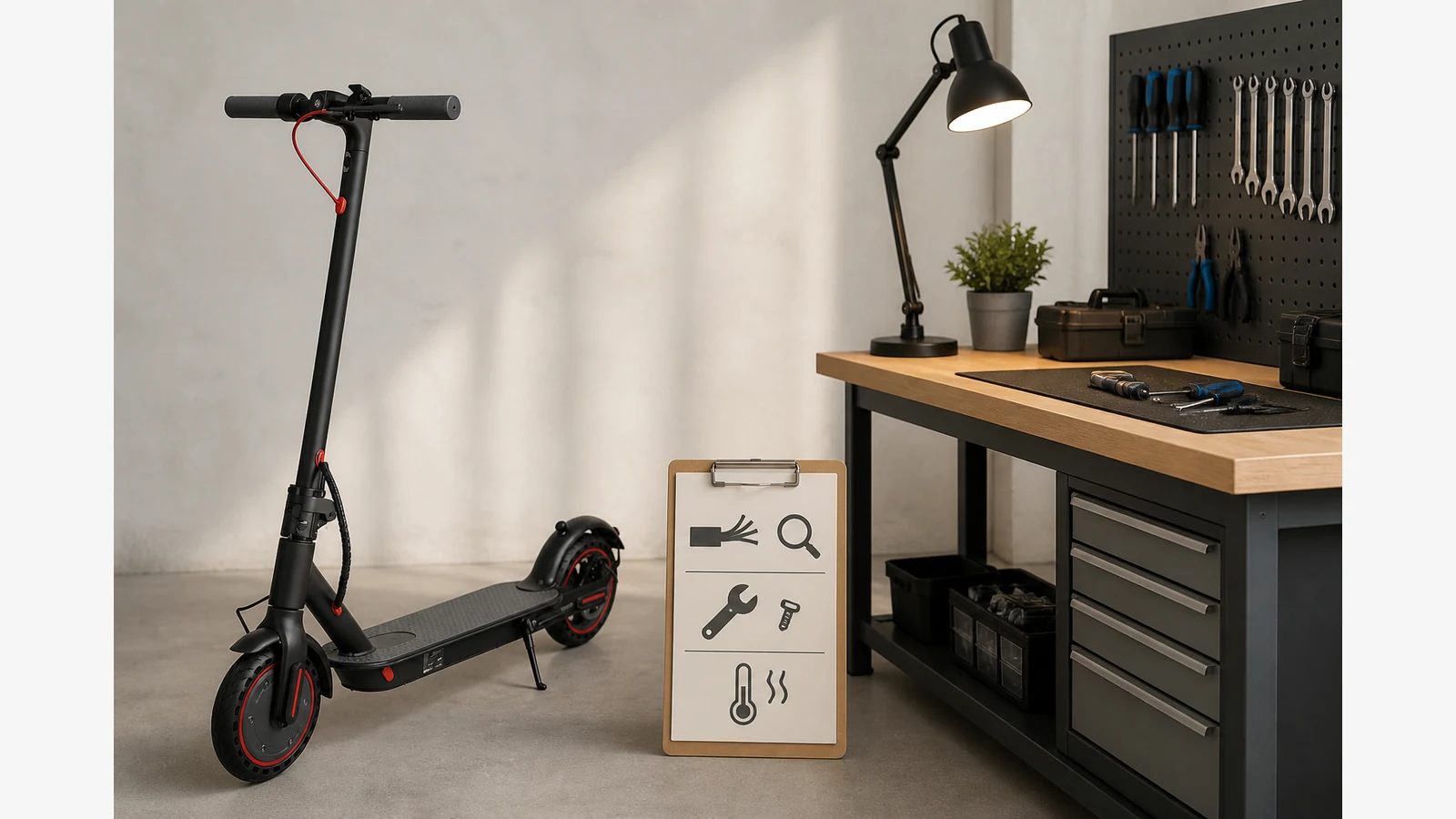
Electric Scooter Warning Signs That Need Professional Repair
Stop using an electric scooter immediately if you notice excessive heat, swelling, leaks, unusual noise, burning smell, smoke, poor performance linked to the battery or charger, frame cracks, a loose stem, damaged cables or ineffective brakes. Do not open sealed batteries or attempt DIY electrical repairs—document what you see and contact the manufacturer, retailer or a competent professional. UK guidance from the Department for Transport, OPSS and Electrical Safety First aligns on stopping for those battery and equipment warning signs and using professionals for repairs.
Immediate stop-use conditions
Treat the following as reasons to power down if safe, disconnect charging equipment if safe, keep people away, and leave escape routes clear:
- smoke, sparks you can see, or an active fire risk;
- a strong burning smell from the battery area, charger or cable;
- battery enclosure swelling, deformation or leakage;
- charger, cable, plug or socket damage discovered mid-charge.
If there is fire or smoke that threatens people, evacuate and call the emergency services rather than trying to move the scooter through a blocked exit. For everyday supervised charging practice that reduces risk, see the electric scooter charging safety checklist.
Battery and charger signs
Department for Transport battery-safety advice for e-scooter users highlights stopping for heat, swelling, leaks, noise, smell or poor performance, and using only the supplied or manufacturer-authorised charger. Electrical Safety First likewise advises stopping if the battery, charger, cable or socket shows damage.
Practical owner actions stay at observation level:
- note when heat feels excessive compared with normal light warmth during charge;
- photograph swelling or leakage without touching fluid;
- unplug damaged charging gear if it is safe to reach the plug;
- do not keep “testing” a charger that already showed a fault.
Mechanical signs that also mean stop
Book professional attention and do not ride if you find:
- cracks or bends in the frame, stem or folding interface;
- a stem or latch that no longer locks as the manual describes;
- damaged brake or control cables;
- abnormal grinding, clicking or scraping noises that are new;
- brakes that feel weak, delayed or ineffective during a stationary check or a careful private-land confirmation.
For stationary brake inspection steps, use how to check electric scooter brakes before riding. Keep owner maintenance at visual-check and stop-use level unless your exact model manual authorises a specific step.
Do-not-diagnose boundary for sealed batteries and electrical systems
Do not open a sealed battery pack, cut into wiring looms, bypass protective connectors or diagnose internal cells with improvised tools. OPSS Buy Safe, Be Safe guidance points people to trusted sellers, compatible manufacturer-recommended parts and professional repairs. Guessing internal faults from colour, smell or online videos is not a repair plan.
What to collect for the retailer or repair professional
Before you contact support, gather:
- model identity and any serial numbers printed on the scooter or documents;
- purchase date and seller details if available;
- clear photos of the warning sign from a safe distance;
- a short timeline: when it started, during charge or after riding, and what you already stopped doing;
- whether an authorised charger was in use.
Products sold via this store carry a 12-month warranty; start date, exclusions, remedies, carriage and other warranty terms are not detailed here, so ask the retailer how a claim or inspection is handled for your order.
Emergency action and private-land reminder
Prioritise people over property. Keep exits clear while the scooter is set aside for inspection. Under current GOV.UK guidance updated 7 July 2026, privately owned e-scooters remain unlawful on public land—do not ride a damaged scooter to a shop across public roads or pavements. Arrange collection or professional advice instead.
If you are comparing a privately used adult scooter for permitted private-land use after resolving safety questions, see the ESCOOTZ Pro Commuter product page.
FAQ
The scooter feels slightly warm after a short private-land ride. Is that an emergency?
Light warmth can occur in normal use, but excessive heat, smell, swelling, leaks, noise or smoke are stop-use signs. If you are unsure, stop and ask the manufacturer or a competent professional.
Can I keep riding if the brakes still “mostly” work?
No. Ineffective or uncertain braking is a stop-use condition until repaired by a competent professional or resolved under manufacturer guidance.
Is opening the battery to “check the cells” ever appropriate at home?
No. Sealed battery and electrical diagnosis belong with the manufacturer or a competent professional.