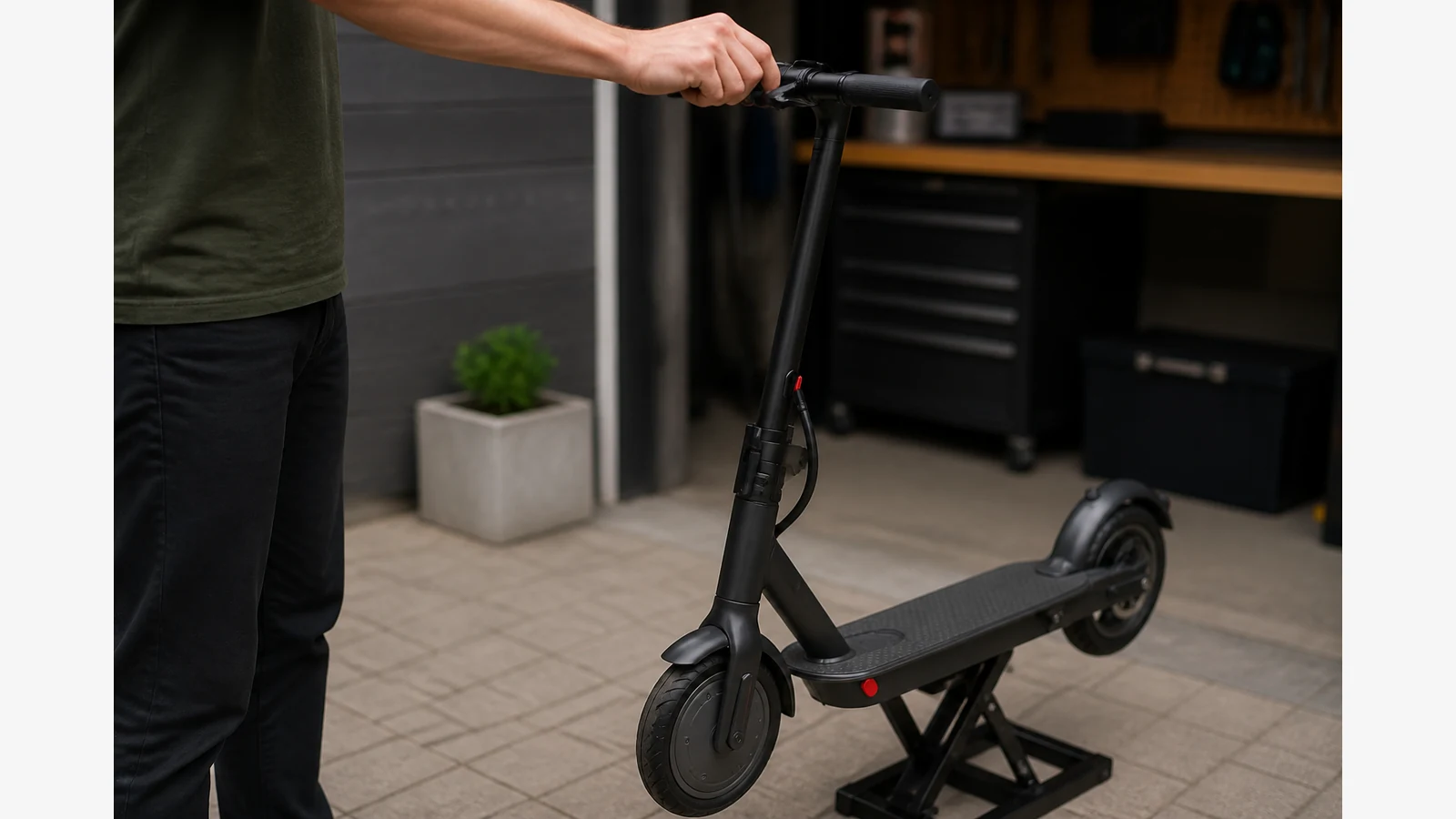
How to Check Electric Scooter Brakes Before Riding: A Stop-Use-First Guide
Inspect and test electric scooter brakes while the scooter is stationary before any low-speed confirmation. Confirm the brake system described in your exact model manual, look for damage or contamination, observe lever feel and wheel behaviour without inventing universal adjustment measurements, and stop use if braking is weak, uneven or damaged. Any riding check must be on private land with the landowner’s permission.
Confirm the brake system in your exact model manual
Scooters use different brake arrangements. Open the manual for your model and identify which controls, cables, levers or other parts you are supposed to inspect. Do not assume disc, drum, electronic or cable hardware from a photo of another brand. Manufacturer manuals for other UK market scooters commonly require brakes to work before each use and describe model-specific pre-use checks; use those themes only as a reminder to follow your instructions.
Visual checks while stationary
With the scooter stable and not being ridden, look for issues that apply to your system:
- damaged, frayed or kinked cable sheathing where cables are visible;
- fluid leaks if your manual describes a hydraulic system;
- oil, mud or other contamination on friction surfaces you are told to keep clean;
- rubbing, scraping or parts that sit loosely when they should be secure;
- lever or control mounts that move unexpectedly on the bar.
If a brake cable is damaged, manuals for comparable products typically call for replacement rather than ignoring the fault. Do not ride and do not improvise a repair with tape or household parts—use the manufacturer or a competent professional.
Lever-feel and wheel-rotation observations
Still stationary, apply the brake control as the manual describes and note whether the lever or control feels spongy, sticks, travels with almost no resistance, or fails to return. If the manual’s inspection method allows gently rotating a wheel by hand with the brake applied and released, keep fingers clear and only observe whether the wheel resists when expected. Do not publish or follow generic millimetre gaps, torque figures or “two-finger” rules that are not in your manual.
Wet or slippery surfaces reduce braking efficiency even when the hardware is intact. Factor surface condition into any later private-land confirmation.
When rubbing, weak braking or damage needs competent service
Stop use and book manufacturer or professional help if you find:
- visible cable or hose damage;
- leaks;
- a control that does not engage or release cleanly;
- persistent rubbing you cannot explain from the manual’s owner checks;
- weak, delayed or uneven braking during a careful private-land low-speed confirmation.
Keep maintenance at visual-check and stop-use level unless your exact model manual authorises a specific owner adjustment. For broader stop-use cues beyond brakes, see warning signs that need professional repair.
Private-land low-speed confirmation
Only after stationary checks pass, and only on private land with permission, use a clear low-speed area free of bystanders. Keep the first movements short. If braking does not feel trustworthy, stop immediately. Fold this brake check into the wider private-land pre-ride safety checklist.
Under current GOV.UK guidance updated 7 July 2026, privately owned e-scooters remain unlawful on public land. Do not plan pavement or public-road brake tests.
Next step
If you are comparing a privately used adult scooter for permitted private-land use, review the ESCOOTZ Pro Commuter product page. Products sold via this store carry a 12-month warranty; start date, exclusions, remedies, carriage and other warranty terms are not detailed here.
FAQ
Should I adjust the brakes myself before riding?
Only if your exact model manual gives an owner-level procedure. Otherwise stop use and seek competent service. This guide does not provide universal adjustment dimensions.
The lever feels soft but the scooter still slows a little. Can I ride?
No. Treat unreliable braking as a stop-use condition until a professional or the manufacturer resolves it.
Can I test brakes on a quiet public road?
No. Privately owned e-scooters remain unlawful on public land under current GOV.UK guidance. Use private land with permission only.