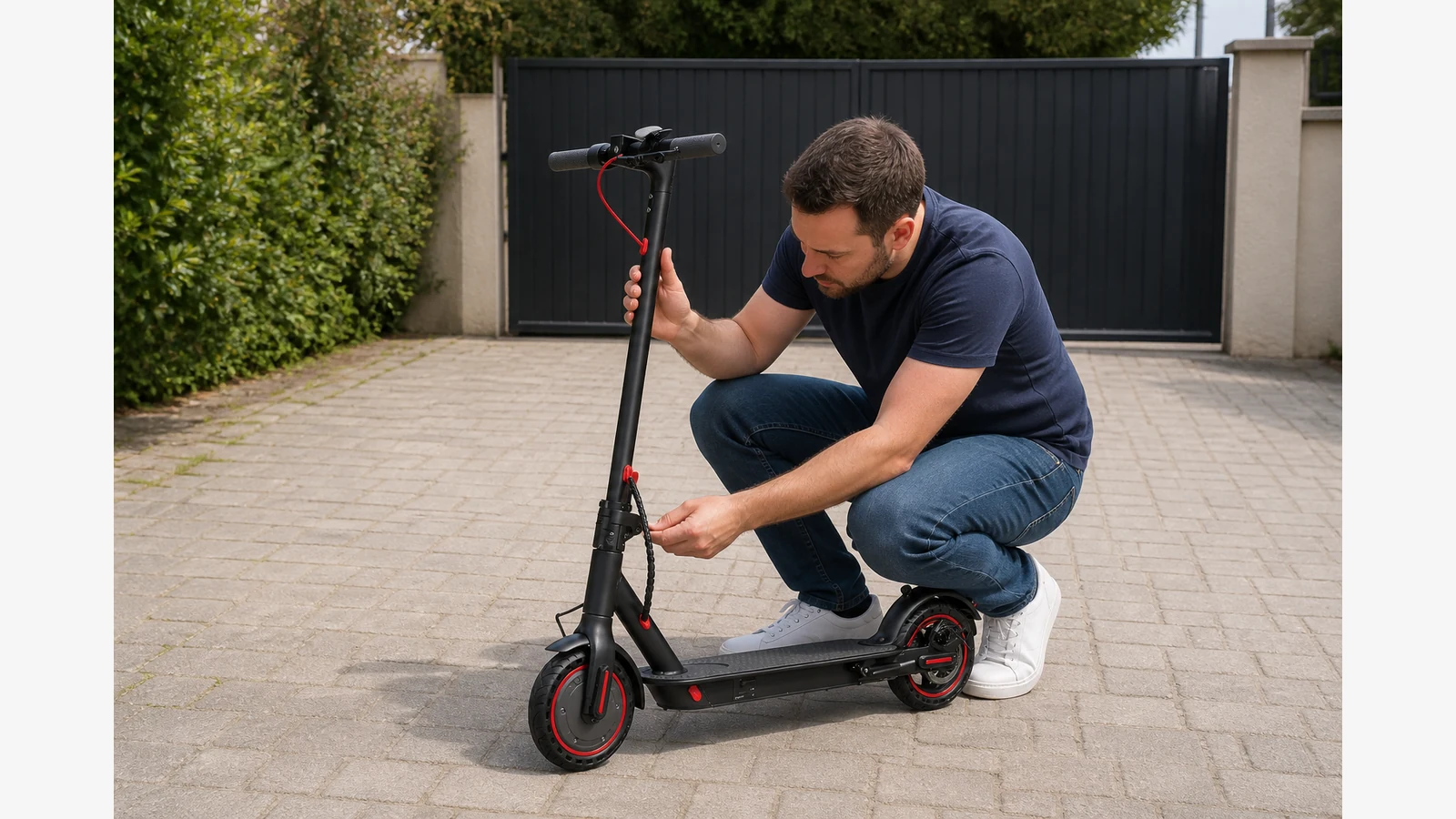
Electric Scooter Pre-Ride Safety Checklist for Private Land: Stop Problems Before Moving
Before you power on an electric scooter, confirm you are on private land with the landowner’s explicit permission, inspect the route, scooter and rider, complete the stationary checks in your exact model manual, and only then consider a low-speed test in a clear private area. Stop immediately if you find damage, loose parts, ineffective brakes, abnormal noises or any other stop-use cue.
Confirm private land and landowner permission
Current GOV.UK guidance updated 7 July 2026 states that privately owned e-scooters remain unlawful on public land and are distinct from official rental trials. Do not use public roads, pavements, cycle lanes or other public land examples in your plan. Get clear permission for the private yard, driveway, paddock or other private site you intend to use, and check for hazards such as wet surfaces, loose gravel, poor light, pets, children at play and vehicle movements.
Visual check of frame, stem, fasteners, wheels and tyres
With the scooter stationary and powered off if the manual requires that for inspection, look for:
- cracks, bends or fresh damage on the frame and deck;
- stem or folding interfaces that do not lock as the manual describes;
- loose or missing fasteners you can see without dismantling sealed parts;
- wheels that wobble unusually, tyres with obvious wear, cuts or embedded debris;
- damaged cables, frayed sheathing or connectors that look crushed or burnt.
Manufacturer manuals for other UK market scooters commonly require private-land use with permission and pre-use checks of fasteners, stem locks, tyres, wheels and brakes. Treat those themes as a prompt to open your manual, not as universal torque figures or adjustment dimensions.
Stationary checks for brakes, controls, lights and unusual sounds
Still without riding, confirm that controls move as the manual describes and that brakes feel present at the lever or control before any movement. Listen for scraping, grinding or other abnormal noises when you rotate a wheel by hand only if the manual’s inspection method allows it and the wheel is clear of fingers and clothing. Check that any lights or indicators the manual lists for your model respond as expected.
For a deeper brake-focused walkthrough, see how to check electric scooter brakes before riding. Do not assume disc, drum, cable or electronic brake designs that you cannot verify on your own scooter.
Low-speed private test area and clear stop-use criteria
If stationary checks pass, use a clear, low-speed private area free of bystanders and obstacles. Keep the first movements short and controlled. Stop use at once and do not continue riding if:
- brakes feel weak, delayed or uneven;
- the stem, fold latch or fasteners shift under light load;
- you hear new abnormal noises;
- the scooter pulls unexpectedly or controls respond inconsistently;
- you notice heat, smell, swelling or other battery warnings.
Repairs, cable replacement, brake work beyond the manual’s owner-level steps, and electrical diagnosis belong with the manufacturer or a competent professional. See warning signs that need professional repair for documentation tips.
Printable private-land pre-ride checklist
- Private land confirmed; landowner permission confirmed.
- Route checked for surface, light, traffic within the private site and bystanders.
- Rider ready: suitable clothing and footwear; distractions put away.
- Frame, stem, fasteners, wheels and tyres visually checked.
- Brakes, controls and any listed lights checked while stationary using the exact manual.
- No heat, smell, swelling, leaks or obvious cable damage.
- Low-speed private test completed only after steps 1–6 pass.
- Stop-use criteria understood before any further riding.
Next step
If you are comparing a privately used adult scooter for permitted private-land use, review the ESCOOTZ Pro Commuter product page. Products sold via this store carry a 12-month warranty; start date, exclusions, remedies, carriage and other warranty terms are not detailed here.
FAQ
Can I do this checklist on a pavement before commuting?
No. This guide is for private land with permission only. Privately owned e-scooters remain unlawful on public land under current GOV.UK guidance.
Do I need tools for every pre-ride check?
Start with visual and stationary checks described in your manual. Do not assume fastener torque values or adjustments that are not specified for your model.
What if the stem lock feels uncertain?
Do not ride. Stop use and seek manufacturer or competent professional help rather than forcing the latch.