Electric Scooter with Seat UK: What to Check Before You Buy
A practical UK guide to seated electric scooters covering the law, comfort, stability, brakes, battery, folding, storage and private-land use.
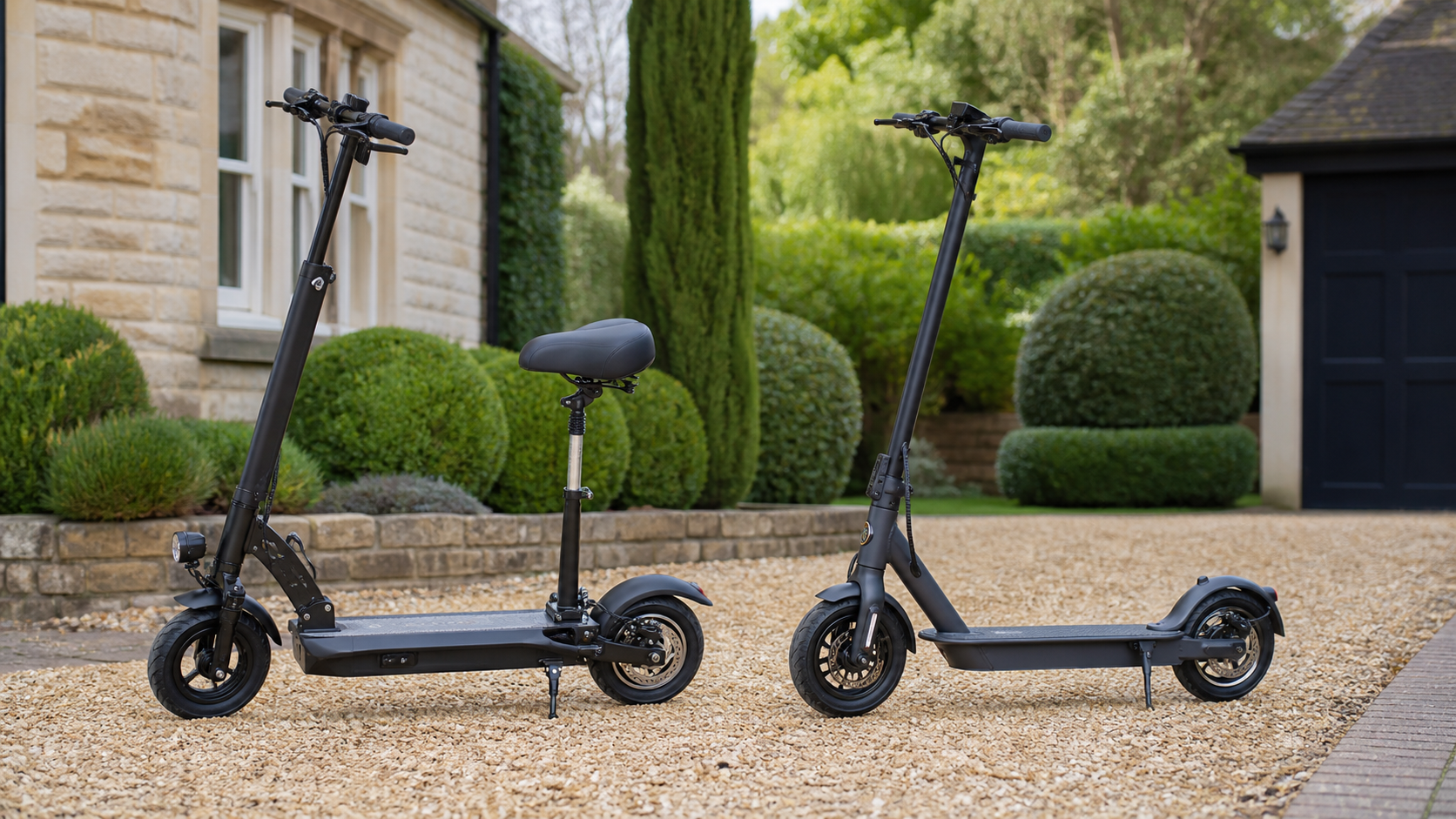
An electric scooter with a seat can reduce the effort of standing and make slow private-land riding more comfortable. It also adds weight, changes how you balance and may make the scooter harder to fold or carry. It does not automatically become a mobility scooter, an e-bike or a road-legal vehicle.
A seat changes comfort, not the law. In the UK, a privately owned e-scooter is generally limited to private land with the landowner’s permission. GOV.UK states that private e-scooters must not be used on public roads, pavements or parks. Official rental trials are a separate system with their own vehicles, insurance and licence rules.
First decide whether a seated scooter fits the job
A seated electric scooter may suit short, controlled trips on a private estate, yard, campsite or other private area where permission is clear. It may also appeal to a rider who finds prolonged standing tiring but does not need a regulated mobility aid.
It is a poor choice when the plan depends on pavement commuting, public cycle lanes or carrying the machine up several flights of stairs every day. If your intended route is public, solve the legal route question before comparing motors or seats.
Do not confuse a seat attachment with a mobility scooter. Mobility scooters and powered wheelchairs have distinct legal classes, design requirements and user rules. A kick-style e-scooter with a saddle does not inherit that status merely because sitting is possible.
Seated versus standing: the practical differences
| Question | Standing scooter | Scooter with seat |
|---|---|---|
| Low-speed comfort | More weight through feet and legs | Can reduce standing fatigue |
| Balance | Rider can shift body position quickly | Lower body position, but seat can limit movement |
| Visibility | Rider is usually taller | Rider may sit lower among obstacles |
| Folding and carrying | Often simpler and lighter | Seat post and bracket add bulk and weight |
| Rough surfaces | Knees can absorb some movement | Impacts may travel through the saddle and spine |
| Mounting | Step on and ride | Requires stable seat, post and clamp setup |
A saddle is not suspension. Small solid tyres, a short wheelbase and poor surfaces can still produce a harsh ride. If comfort is the reason for buying, inspect tyre type, wheel size, deck room, seat padding and any real suspension rather than judging from the seat alone.
Seven checks that matter before purchase
1. A lawful place to ride
Write down the exact place of use and who controls it. “Private land” does not mean any quiet car park or empty path. You need the owner or occupier’s permission, and the public must not have unrestricted access in the way they would to a pavement or park.
The UK electric scooter guide explains the wider distinction between privately owned machines and official rental trials.
2. Seat attachment and frame limits
Check that the model is designed for the supplied seat. An improvised clamp can concentrate load in a deck or frame that was not engineered for it. Confirm the maximum rider load includes the seated configuration and follow the maker’s torque and inspection instructions.
Look for play at the seat base, post and folding mechanism. Movement that seems minor while stationary can become distracting under braking.
3. Braking from the seated position
The rider’s weight and position affect stopping. Confirm that both controls are easy to reach without leaning forward, and practise progressive stops at low speed. A combination of mechanical and electronic braking can be useful, but braking performance depends on setup, surface, tyres and rider load.
Use the private-land pre-ride checklist before every session, especially after folding or adjusting the seat.
4. Stability and steering clearance
Sit on the scooter with both feet able to reach the ground or deck as intended. Turn the handlebar fully in both directions and check that knees, cables and the seat do not interfere. A tall saddle on a narrow, short scooter can feel less stable than the product photograph suggests.
5. Battery and realistic range
Range claims are normally measured under favourable conditions. Rider mass, temperature, tyre pressure, stops, gradients and speed all affect the result. Plan around a conservative usable range and keep enough charge to return without deeply discharging the battery.
Check the charger label, connector and storage instructions. The electric scooter charging safety guide covers routine charging and warning signs.
6. Weight, folding and storage
Add the seat hardware to the scooter’s listed weight. Test whether the folded package fits the intended storage space and whether one person can lift it safely. Some seats need to be removed before folding, which can turn a quick journey into a parts-and-tools routine.
7. Parts, support and returns
Ask whether brake pads, tyres, tubes where applicable, chargers and seat clamps are available. Save the live specification and returns terms at purchase. A seat that feels comfortable for five minutes may not work over a longer private-land session, so understand how far you may inspect or test the product without affecting a return.
A sensible private-land setup
- Confirm permission and keep pedestrians away from the practice area.
- Inspect tyres, brakes, latch, seat clamp and handlebar alignment.
- Set the seat so controls remain comfortable and steering is unobstructed.
- Wear a suitable helmet and closed footwear.
- Begin in the lowest mode and practise starts, turns and stops.
- Recheck all clamps after the first short session.
- Stop if the battery, charger, cables or connectors become damaged or unusually hot.
For readers considering a standing model as the baseline, the eScootz Pro Commuter product page shows the sort of motor, battery, brake and folding information that should be verified. It is not evidence that a compatible seat is included; check the exact SKU and supplied parts.
Common mistakes
- Assuming a seat makes a private scooter legal on public roads or pavements.
- Buying before confirming a lawful place to ride.
- Treating a saddle as suspension.
- Ignoring the extra weight and awkward folded shape.
- Fitting a universal seat without checking frame compatibility.
- Relying on maximum range rather than a conservative return margin.
- Practising braking only after increasing speed.
- Charging with an unverified replacement charger.
FAQ
Are electric scooters with seats legal in the UK?
The seat does not change the basic status of a privately owned e-scooter. GOV.UK says private e-scooters are illegal to ride in public places such as roads, pavements and parks; they may be used on private land with permission. Official rental trial rules are separate.
Is a seated electric scooter a mobility scooter?
Not simply because it has a seat. Mobility scooters and powered wheelchairs are purpose-built and governed by their own classification rules. Check the actual vehicle category and documentation.
Is a seat safer than standing?
Neither layout is automatically safer. A seat may reduce fatigue, but it changes rider position, steering clearance and the way impacts are felt. Brakes, tyres, surface, speed and rider skill remain central.
Can I add a universal seat to any electric scooter?
Only if the scooter and seat manufacturers confirm compatibility. An unsuitable clamp can damage the deck or move under load. Avoid drilling or modifying structural parts without approved instructions.
What range should I expect?
Use the maker’s figure as a comparison point, not a promise. Plan for less in cold weather, on hills, with a heavier rider or at higher speed, and keep a return reserve.
Bottom line
Choose a seated electric scooter only after confirming private-land permission. Then judge the machine by seat attachment, braking position, stability, battery, parts support and the weight of the complete folded package. Comfort matters, but the legal use case and mechanical fit come first.