Fastest Electric Scooter UK: Torque vs Top Speed
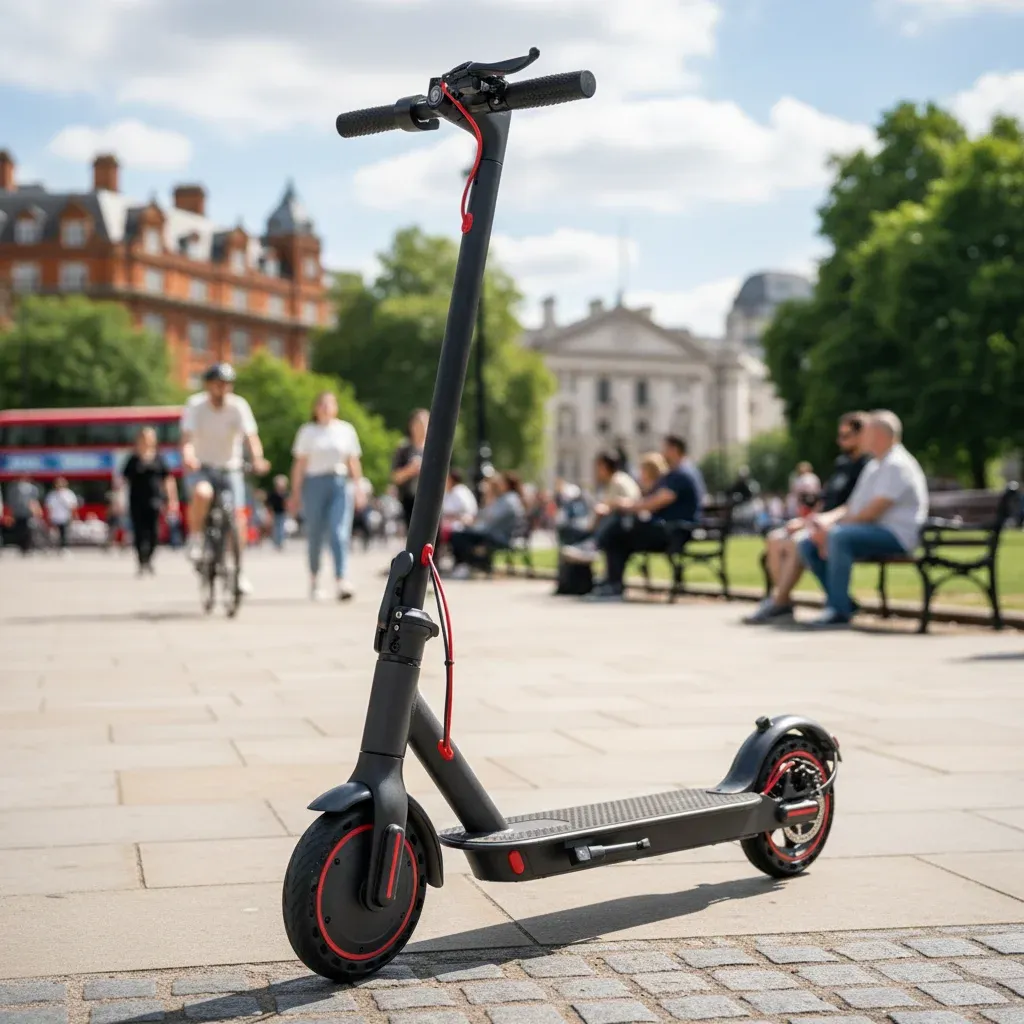
Short answer: The fastest electric scooter on a spec sheet is rarely the quickest thing to live with. If your current 250W scooter dies on every hill, what you are missing is torque and sustained power, not top speed — and a well-tuned 500W scooter fixes that without buying a heavy, extreme machine you cannot carry or legally use.
This guide is for the rider upgrading from an entry-level scooter that over-promised: the one that crawled up inclines, lost its nerve at half battery, and delivered nothing like the range printed on the box. Chasing the biggest number on a product page is how that mistake gets repeated. Here is what actually makes a scooter fast where it counts.
What "fastest" actually means
When people search for the fastest electric scooter they usually want one of three different things:
- Top speed — the maximum under ideal test conditions. Marketing leads with this number because it is the easiest to inflate.
- Acceleration — how quickly you reach cruising speed from a standstill.
- Usable speed — the pace a scooter actually holds over inclines, rough surfaces and stop-start riding, with a real rider on board.
If you have owned a budget scooter, you already know these are not the same thing. A machine can quote an impressive maximum and still be overtaken by joggers on a moderate slope. Usable speed is the figure that decides whether you arrive without getting off to push — and it is decided by torque and sustained power, not the headline number.
Why your 250W scooter dies on hills
A motor's wattage is its sustained power budget. Flat, smooth ground at modest speed asks little of it; a gradient with an adult on the deck asks for several times more. When the demand exceeds what a 250W motor can deliver, the scooter sheds speed until the sums balance — that is the familiar crawl, and eventually the dismount-and-push.
Three things make it worse:
- Rider weight. Entry-level scooters are often tuned around light test riders. A heavier adult exposes the shortfall immediately.
- Battery sag. As charge drops, cheap packs cannot hold voltage under load, so the motor delivers less than its rating for the second half of every journey.
- Optimistic range figures. Quoted range is measured under favourable conditions. Hills, cold weather and hard acceleration can cut it dramatically — which is why the box number and your experience never matched.
Torque vs top speed: the upgrade that actually feels fast
Torque is the twisting force that gets you moving and keeps you moving when the road tilts up. A scooter with strong torque pulls away cleanly from a standstill, holds its pace on inclines and feels lively in stop-start riding. A scooter with a high top speed but weak torque only feels fast on a long, flat, empty stretch — terrain most UK riders rarely see.
This is why a 500W scooter is the natural upgrade from a struggling 250W machine: roughly double the sustained power budget transforms hills and acceleration, the two things that made the old scooter miserable. One verified eScootz owner put it plainly: the 500W motor "makes a huge difference on the slight incline near my flat" and is "so much punchier than the budget scooter I bought on Amazon previously".
Note that a capped top speed is not the compromise it sounds. The eScootz Pro Commuter caps out at 25 km/h (15.5 mph) — the same limit applied to England's official rental scooters — and spends its 500W on pull-away and hill-holding instead. On paper that looks modest; on a gradient it is the difference between riding and pushing.
What else decides real-world pace
- Battery quality. A 36V 10.4Ah lithium pack with honest capacity holds its performance deeper into the charge than the vague "long range" cells in budget machines.
- Tyres and maintenance. Underinflated pneumatic tyres add rolling resistance and punctures add downtime. Solid honeycomb tyres, like the 8.5-inch set on the eScootz Pro, never puncture and never need topping up — the trade-off is a firmer ride over broken surfaces.
- Weight — the scooter's, not just yours. A 20kg-plus "performance" scooter is quick until you meet stairs. At 12.5kg with a 3-second fold, a lighter machine keeps its speed useful door to door.
- Braking. More pace needs more stopping. A dual system — mechanical disc plus electronic E-ABS — keeps stopping distances predictable in the wet, which is what lets you actually use the speed you paid for.
Before you upgrade: a five-point checklist
- Confirm the motor's sustained (rated) wattage, not a "peak power" figure that only holds for seconds.
- Look for a realistic range claim with conditions stated — the eScootz Pro quotes up to 35km depending on rider weight and terrain, which is the honest way to state it.
- Check the maximum rider weight (120kg on the eScootz Pro) against reality, since this is where budget scooters quietly fail.
- Insist on two independent brakes and decent lighting for winter evenings.
- Check warranty and support location: a 12-month warranty with UK-based support beats a marketplace seller who vanishes after dispatch.
A word on the law before you spend anything
However fast your scooter is, a privately owned e-scooter cannot legally be ridden on UK public roads, pavements or cycle lanes — private land with the landowner's permission is the only lawful place, and police can fine riders and seize scooters used illegally in public. If that changes your plans, read our plain-English guide to electric scooter law UK before buying, not after.
Buying for someone else?
If you are shopping for a teenager rather than yourself, power and speed sit differently — our guide to choosing an electric scooter for kids covers what parents should check first. And if comfort matters more to you than pace, see whether an electric scooter with seat suits your riding better.
Frequently asked questions
Is a 500W scooter noticeably faster than a 250W one?
In the ways that matter, yes. Top speed may be similar once legal-style caps are applied, but acceleration and hill-climbing improve dramatically — the 500W motor holds pace on gradients where a 250W scooter fades to walking speed.
Why does my current scooter slow down on every hill?
The motor cannot sustain the power a gradient demands, so it sheds speed to cope. Rider weight and a sagging battery make it worse. More rated wattage and a better battery are the fix; no riding technique recovers power the motor does not have.
Should I just buy the highest top speed I can afford?
No. Beyond the legal position, extreme machines are heavy, expensive and demand more from brakes and tyres. Buy sustained power and control — torque, dual brakes, honest range — rather than a number you will rarely reach.
Do solid tyres make a scooter slower?
Solid tyres can carry slightly more rolling resistance than perfectly inflated pneumatic tyres, but they never lose pace to slow leaks or punctures and never need topping up. In day-to-day riding, the difference you notice is ride firmness on broken surfaces, not speed.
What range should I expect after upgrading?
Treat quoted figures as a ceiling: the eScootz Pro's up-to-35km assumes favourable conditions, and hills, cold or hard acceleration reduce any scooter's range. The difference after upgrading is that a quality pack fades predictably instead of collapsing halfway.
The bottom line
Stop shopping for the fastest electric scooter and start shopping for the strongest usable one. For a rider burned by a weak 250W machine, a 500W scooter with real torque, dual brakes, honest range and a carryable frame — the eScootz Pro Commuter's formula at £442.79 — is the upgrade that actually feels fast every day, within the law and without the bulk.
Ready to join the eScootz revolution?
Explore the Range — £442.79