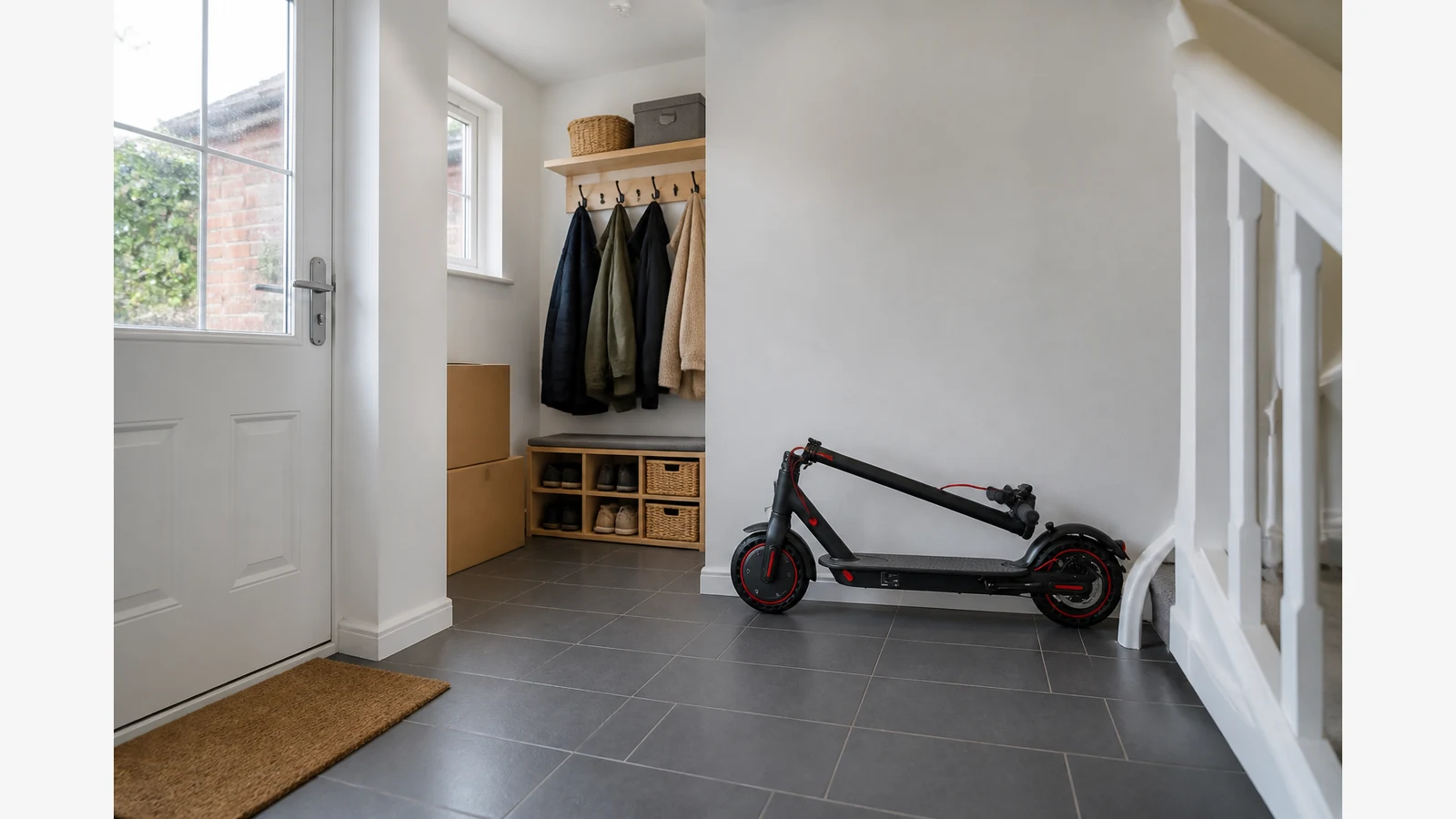
How To Store An Electric Scooter Safely At Home Uk
Store an electric scooter at home only where it cannot block a doorway, hallway, stairwell or any other escape route; choose a dry, moderate-temperature, uncluttered spot; keep storage separate from charging; and inspect for post-ride heat or damage before leaving the scooter indoors. UK battery and fire-safety guidance repeatedly stresses clear exits and careful handling of batteries, chargers and related equipment.
The non-negotiable escape-route rule
If a fire or other emergency starts, people must be able to leave quickly. Do not park a scooter under stairs that form an exit, across a hallway, against a front door, or in any choke point that would slow evacuation. Department for Transport and Electrical Safety First guidance both highlight keeping escape routes clear during charging; the same layout logic applies to where you leave the scooter when it is not in use.
Walk the route from living spaces to the nearest exit with the scooter in its proposed parking place. If you have to squeeze past it, move it.
Choose a dry, moderate-temperature, uncluttered storage location
Prefer a hard-floor bay that is dry, away from direct heater or radiator contact, and free of coats, cardboard, packaging, laundry and other combustible clutter. Avoid damp corners, flooded garages and spots where the scooter could tip into soft furnishings.
Use confirmed details temperature set-points that are not in your model manual. If the manufacturer gives storage temperature or battery handling instructions, follow those exact instructions rather than a generic online tip.
Separate storage from charging and inspect after riding
Storage is not the same as charging. Charge only while awake and present, using the supplied or manufacturer-authorised charger, in a clear ventilated location that still leaves exits open. When charging is finished, unplug according to the manual and return the scooter to its storage bay. See the electric scooter charging safety checklist for the full charging sequence and stop signs.
Before you bring a scooter indoors after use:
- check for unusual heat around the battery area;
- look for swelling, leaks, damaged cables, loose parts or new scrapes;
- if anything looks wrong, do not store it beside beds, sofas or escape routes—stop use and seek manufacturer or professional advice.
Flat, house and garage decision points
Use this decision table as a layout aid, not as a substitute for your manual or local fire-safety advice:
- Flat or apartment: pick an internal hard-floor corner that leaves the front door and any shared corridor clear; avoid under-stair cupboards that sit on the only way out.
- House hallway or utility space: only if the scooter does not narrow the exit path; keep coats and cardboard off the scooter and away from chargers.
- Garage or outbuilding: useful when dry and secure, but still keep the scooter away from heaters, fuel cans and clutter, and do not treat a garage as a place for unattended overnight charging.
Ask yourself whether working smoke alarms cover the storey where the scooter lives, whether everyone in the household knows the exit plan, and whether a visitor could still leave without climbing over the scooter.
Longer storage and when not to bring it indoors
For longer periods out of use, follow the exact battery and storage instructions in your model manual. Before the next ride, re-check for damage, unusual smell, swelling or poor performance. If the battery area is hot, swollen, leaking, noisy or smelling of burning, do not store the scooter in living spaces and do not attempt DIY battery work. Document what you see and contact the retailer, manufacturer or a competent professional. Related stop-use cues are summarised in our guide to warning signs that need professional repair.
Do not bring a scooter indoors for storage if it is wet in a way the manual forbids, if it shows active damage signs, or if the only indoor space available would block an exit.
Private-land reminder and next steps
Under current GOV.UK guidance updated 7 July 2026, privately owned e-scooters remain unlawful on public land. Riding examples in this guide assume private land with the landowner’s permission. Safe home storage still matters even when the scooter never leaves private property.
If you are reviewing a privately used adult scooter for permitted private-land use, see the ESCOOTZ Pro Commuter product page. Products sold via this store carry a 12-month warranty; start date, exclusions, remedies, carriage and other warranty terms are not detailed here.
FAQ
Can I store an electric scooter in a hallway?
Only if the hallway remains a clear escape route. If the scooter narrows the path to a door or stairs, choose another bay.
Is it safe to charge the scooter where I store it?
Only if that spot also meets charging rules: approved charger, awake and present supervision, clear exits, and no combustible clutter. Otherwise charge elsewhere, then store after unplugging.
What if my flat has almost no spare floor space?
Prioritise exit clearance over convenience. A smaller clear footprint beside a wall is safer than a larger scooter blocking the only way out.